
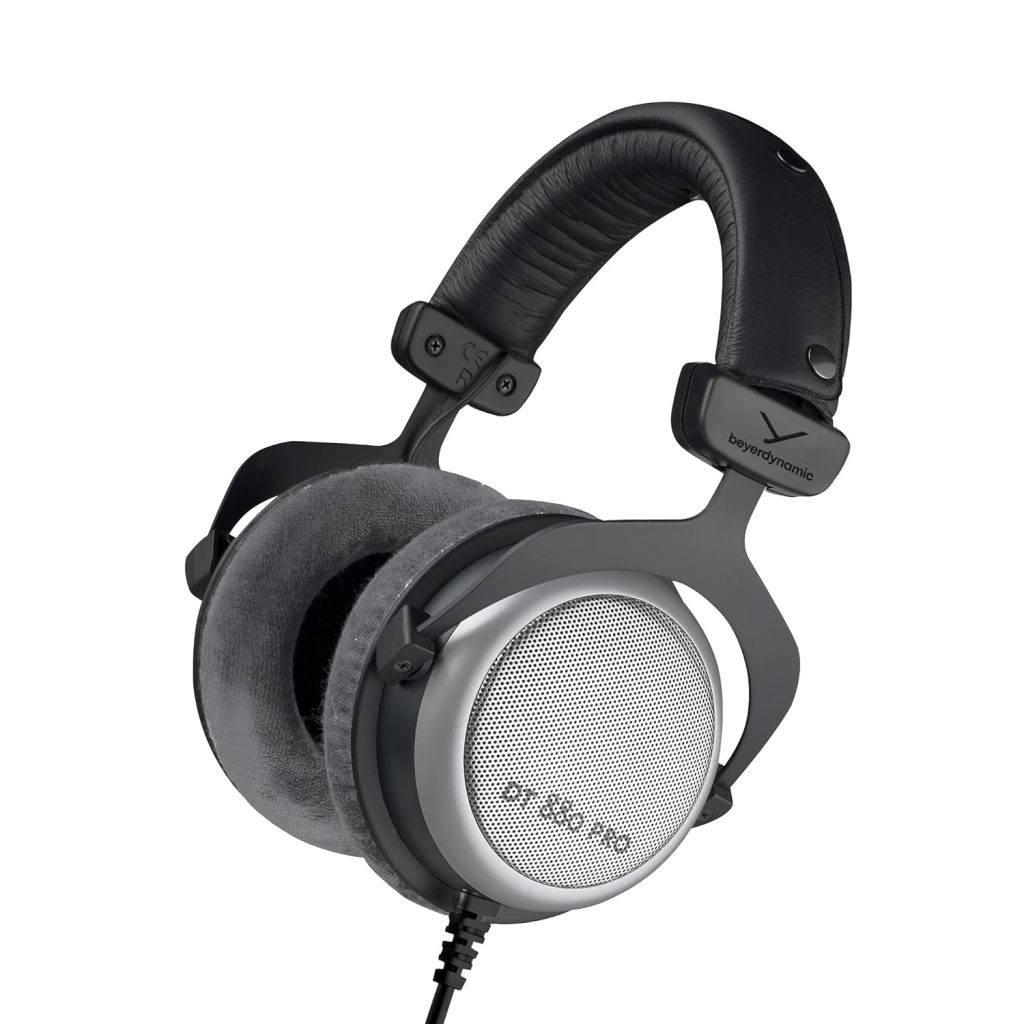
If you’ve been around audio circles for a while, chances are you’ve heard of the Beyerdynamic DT880. I’ve owned a pair for years, and while they may not have the legendary “flatness” of the Sennheiser HD600, the DT880 has its own strengths that make it a favorite for many engineers, producers, and music lovers.
Comfort First
One of the biggest selling points of the DT880 is comfort. The velour ear pads are incredibly soft, and the clamping force is gentle enough that you can wear them through long editing or mixing sessions without fatigue. For me, that’s been a game changer – I can work for hours without feeling like I need to take a break just to give my ears some relief.
Semi-Open Design for Mixing
Unlike fully closed-back headphones, the DT880’s semi-open design strikes a nice balance. You get a natural, airy sound that’s well-suited for mixing and reference listening, while still keeping a bit of isolation. It won’t replace nearfield monitors, but in a home or project studio, it’s a very solid option.
Practical Touches
Beyerdynamic ships the DT880 with a protective carry bag – a detail I really appreciate. Full disclosure: I ended up “stealing” mine to protect my HD600 instead. It’s a small thing, but it shows the attention to practicality that makes these headphones a long-term investment.
Versions: Pro vs. Premium
The DT880 comes in Pro and Premium versions. The difference is mostly in the headband design and clamping force – the sound is virtually identical. It really comes down to personal preference. If you’re on a budget – get the Premium, otherwise – go for the Pro version.
Impedance Matters
One important note: the DT880 is available in multiple impedance ratings (32, 250, and 600 ohms). Make sure to match the version to your gear. For portable devices or weaker headphone amps, the 32-ohm model makes sense. For studio interfaces and dedicated amps, the 250 or even 600-ohm versions can deliver better headroom and fidelity.
Final Thoughts
The Beyerdynamic DT880 may not be the flattest reference headphone on the market, but it’s a comfortable, affordable, and reliable tool for editing, mixing, and everyday reference listening. If you want a headphone that feels good on your head and delivers a detailed sound signature you can trust, it’s a worthy addition to any studio setup.